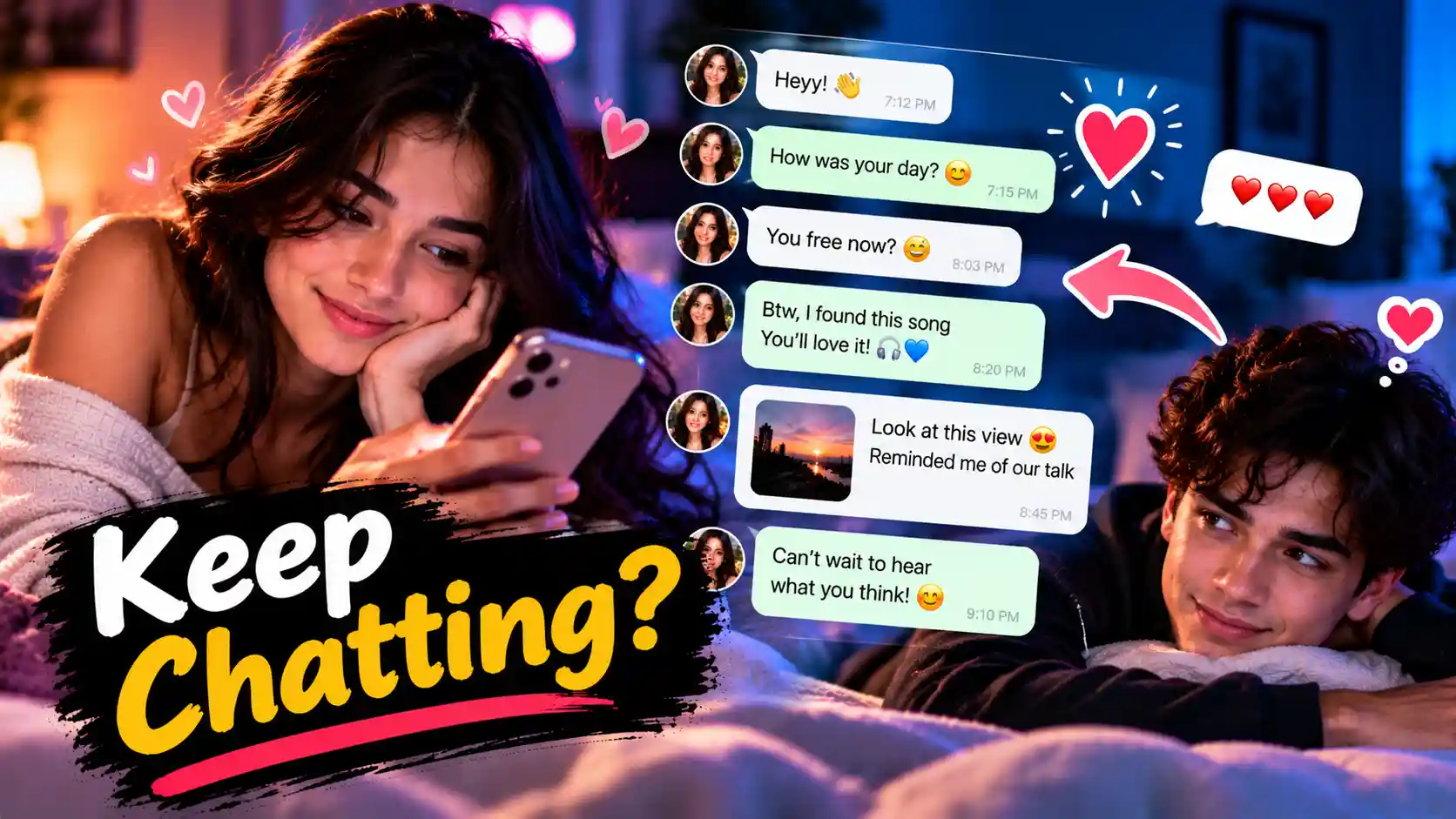
Dating conversations can sometimes be difficult to read. Someone may reply politely without wanting to continue, while another person may be genuinely interested but communicate in a quieter way.
Instead of trying to interpret one message, it can be more useful to look at the overall way someone participates in the conversation.
Their willingness to continue, the questions they ask, and whether they occasionally initiate conversations can all provide useful context.
Here are some signs that someone may want to keep chatting with you.
1. They Start Conversations Too
One of the clearest signs of mutual communication is when the other person sometimes starts the conversation themselves.
They may send you a message about something that happened during their day, share something they think you might like, or simply check in.
This shows that the conversation is not always dependent on you starting it.
2. They Ask Questions About You
Someone who wants to continue getting to know you will often show curiosity about your life.
They may ask about your hobbies, plans, opinions, interests, or experiences.
The important part is not the number of questions but whether they are genuinely engaging with your answers.
3. They Remember Small Details
People often remember details that are meaningful or interesting to them.
If someone later brings up a movie you mentioned, asks about an event you were planning to attend, or remembers your favorite hobby, it can show that they were paying attention.
Remembering details does not automatically indicate romantic interest, but it can be a sign of genuine engagement.
4. They Add New Topics
A conversation is easier to continue when both people introduce new subjects.
If the other person regularly moves from one topic to another instead of simply answering your questions, they are contributing to the interaction.
For example, they might answer your question about music and then tell you about a concert they attended.
That creates another opportunity for the conversation to continue.
5. They Share Things Without Being Asked
Another sign can be when someone voluntarily tells you about their day or shares something they recently discovered.
They might send you a funny photo, recommend a movie, mention an interesting experience, or tell you about something they are looking forward to.
Sharing small parts of everyday life can indicate that they are comfortable including you in their conversations.
6. Their Replies Have Context
There is a difference between simply answering a message and actually responding to it.
For example, a short answer may provide only the information you requested, while a more engaged response may include an explanation, personal opinion, or another detail.
The length of the message is not everything. What matters is whether the person is contributing something that gives you an opportunity to respond.
7. They Continue Conversations Later
A conversation does not have to remain active all day to be meaningful.
Someone may disappear for several hours because they are busy and then return to continue a subject you were discussing earlier.
Coming back to an unfinished conversation can show that they did not simply forget about the interaction.
8. They Suggest Things to Talk About Later
Someone may mention a future conversation without making a formal plan.
For example, they might say that they want to tell you about a movie they are watching or ask you to remind them to share a story later.
These small comments can show that they expect the communication to continue.
9. They React to What You Share
Communication is not always about asking questions.
If someone responds to your stories, photos, opinions, or recommendations with genuine reactions, they are participating in the conversation.
They might agree, disagree, joke about something, or tell you about a similar experience.
A real reaction gives the conversation somewhere to go.
10. They Make Time for the Conversation
Everyone has different schedules, so immediate replies should not be treated as a requirement.
A better sign can be whether someone generally makes an effort to communicate when they have time.
They may not reply instantly, but they eventually return to the conversation and participate.
Consistency can tell you more than response speed.
What If They Are Interested but Quiet?
Not everyone shows interest in the same way.
Some people are naturally reserved and may not send long messages or start conversations frequently.
They may still show interest by responding thoughtfully, remembering details, or making an effort when they are available.
This is why it is better to consider several behaviors together rather than expecting one specific texting style.
What If You Are Always Starting the Conversation?
If you are consistently the person who sends the first message, it may be worth stepping back occasionally.
This does not mean you should intentionally ignore the person or play games.
Simply give the other person an opportunity to initiate.
If they eventually start a conversation themselves, that provides additional information about how much effort they are willing to put into staying connected.
Don’t Judge Interest by Response Speed Alone
Fast replies can feel encouraging, but response time by itself does not tell you how someone feels.
Someone may have plenty of free time and reply immediately without wanting a deeper connection. Another person may be interested but have a demanding schedule.
Look at the quality and consistency of the communication rather than focusing on how many minutes it takes to receive a reply.
When the Conversation Feels One-Sided
If you are constantly creating topics, asking questions, sharing things, and trying to keep the conversation alive while receiving very little engagement in return, the interaction may not be balanced.
You do not need to keep increasing your effort.
Give the other person room to participate and see whether they choose to do so.
Healthy communication generally works better when both people contribute.
Final Thoughts
Knowing whether someone wants to keep chatting is rarely about one particular text message.
Look for a combination of behaviors: starting conversations, asking about you, remembering details, sharing experiences, returning to conversations, and making an effort when they are available.
At the same time, remember that people have different communication styles. Someone being quiet does not automatically mean they are uninterested, just as frequent messages do not automatically indicate romantic feelings.
The clearest picture usually comes from observing the overall pattern and allowing both people enough space to show how much they want to communicate.