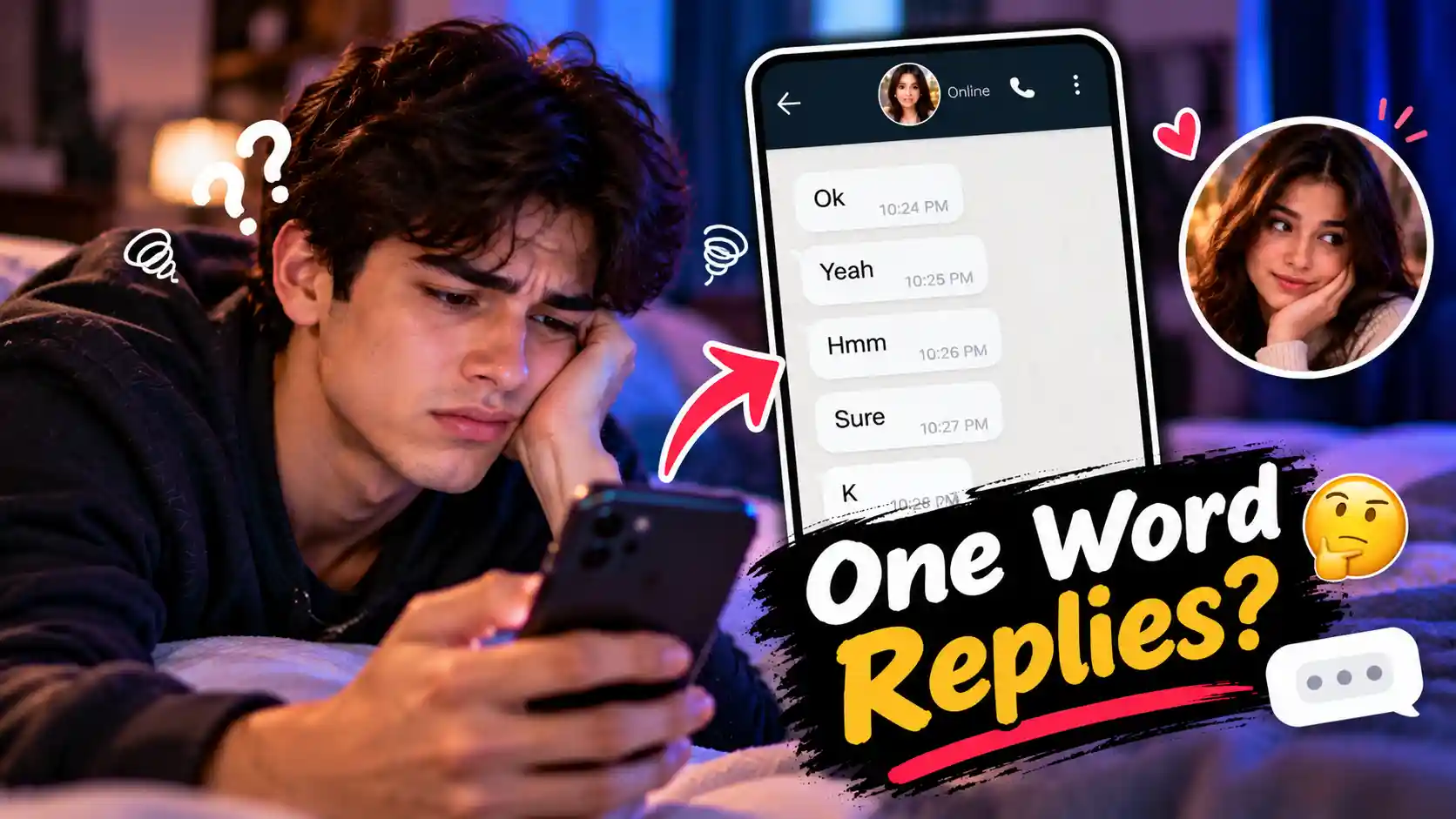
Texting can become confusing when someone who was previously having a conversation suddenly starts replying with messages like “okay,” “yeah,” “nice,” or “sure.”
A short reply can mean many different things. The person may be busy, tired, distracted, naturally brief in their texting style, or simply unsure how to continue the conversation.
Because of that, it is usually better not to judge the situation based on one short message. Instead, look at the overall pattern and how the person communicates over time.
Here are some ways to handle one-word replies without making the situation unnecessarily awkward.
1. Don’t Immediately Assume They Are Not Interested
A short response does not automatically mean someone has lost interest.
People have different texting habits. Some enjoy long conversations, while others naturally communicate with short messages.
Someone might also be replying quickly because they are at work, studying, traveling, or dealing with something else.
Before drawing a conclusion, consider the circumstances.
2. Look at the Pattern
One short reply is very different from receiving short replies throughout every conversation.
If someone normally sends detailed messages but suddenly responds with one or two words, there may be a temporary reason.
On the other hand, if their replies have consistently been extremely brief and they rarely contribute anything to the conversation, that gives you more information about their communication style.
The overall pattern is more useful than one message.
3. Check What You Asked
Sometimes a one-word response happens simply because the question only requires a short answer.
For example, questions such as “Did you eat?” or “Are you home?” can naturally produce answers like “Yes” or “No.”
Before assuming there is a problem, consider whether your message actually gave the person much to respond to.
A more open-ended topic may create a better opportunity for conversation.
4. Don’t Send Several Follow-Up Messages
When someone gives a short answer, it can be tempting to send another question immediately.
Sending several messages in a row, however, can make the conversation feel forced.
If the person is busy, they may appreciate having some space.
You can respond naturally and allow them to participate when they have the time and interest.
5. Try Changing the Subject
Sometimes a conversation becomes short simply because the current topic is not interesting to the other person.
If you have been discussing work or everyday routines, try moving toward something more engaging.
You could talk about a recent movie, a place they want to visit, a hobby, food, music, or an experience you both have had.
A different subject can sometimes completely change the energy of a conversation.
6. Stop Asking Question After Question
If every message you send is a question, the other person may feel like they are being interviewed.
Instead of asking another question immediately, share something about yourself.
For example, if you ask what someone did during the weekend and they answer briefly, you could mention something interesting you did during your own weekend.
This gives them another way to respond without putting all the responsibility on them.
7. Give Them Some Time
Not every conversation needs an immediate response.
If someone is replying briefly, consider giving them some time before trying to restart the conversation.
They may return later when they are more available.
Constantly checking whether they have replied or sending reminders can create pressure that was not necessary in the first place.
8. Pay Attention to Effort, Not Just Message Length
A short message can still show effort.
Someone might send a brief response but ask you a question afterward, remember something you previously mentioned, or start a new conversation later.
Those actions can provide more context than the number of words in a single message.
Look at whether the person contributes to the relationship overall rather than counting every word they send.
9. Know When to Stop Carrying the Conversation
A conversation should not depend entirely on one person.
If you repeatedly start conversations, ask questions, introduce topics, and try to keep things moving while the other person consistently gives minimal responses, it may be worth stepping back.
You do not need to keep creating new topics indefinitely.
Giving the other person an opportunity to initiate can show whether they also want to continue communicating.
10. Ask Directly If You Are Confused
If you have been talking for a while and the change in communication is noticeable, a simple and respectful question can sometimes clear things up.
You do not need to accuse the person of ignoring you.
You could simply ask whether everything is okay or whether they are having a busy week.
A direct but calm approach can prevent unnecessary guessing.
What Not to Do When Someone Replies Briefly
There are a few reactions that can make the situation worse.
Avoid sending angry messages, demanding an explanation, or repeatedly asking whether the person is interested.
Do not intentionally ignore them for days simply to make them jealous or try to create a reaction.
It is also not useful to analyze every “okay,” “hmm,” or “sure” as though it has a hidden meaning.
Communication is usually easier when you respond to the overall situation rather than trying to decode every individual message.
What If Their Replies Stay Short?
If the pattern continues despite giving the person space and changing the conversation, consider reducing your effort.
This does not mean you need to make a dramatic announcement or end the conversation immediately.
Simply stop forcing the interaction and see whether the other person makes an effort to continue.
Mutual communication is important in any dating situation.
When Short Replies Are Completely Normal
Some people simply prefer short texts.
They may be much more expressive in person or during phone calls than they are through messages.
Someone can also have a busy communication style where they use texting mainly for quick updates rather than long conversations.
If they consistently show interest in other ways, short messages do not necessarily indicate a problem.
Final Thoughts
One-word replies can be confusing, but they do not always have a clear meaning.
Before making assumptions, consider the person’s normal texting style, the type of question you asked, their current circumstances, and their overall effort in communication.
Give them space, try changing the subject, and avoid sending multiple messages simply because the conversation has slowed down.
If the pattern continues and you are doing all the work to keep the conversation alive, stepping back can give you a clearer picture of whether the other person also wants to continue.
Sometimes the best response to a short message is not another message—it is simply giving the conversation some room.